Buying Pros and Cons
Pros of buying a new Condo
Cons of buying a new Condo
If construction isn’t complete, you are reliant on drawings, floor plans, and sample materials to determine what the condo and common property will look like.
You may have to wait months for construction to be competed. Your initial deposit will be tied up until construction is substantially completed.
Your move-in date could be delayed if construction is behind schedule.
You may have to pay occupancy fees (condo rent) if you move in before you receive the certificate of title from the developer.
The condominium’s estimated budget could change drastically once the condominium is completed, which could result in increased condo contributions (fees).
New condominium developments are sometimes built in multiple stages. A developer may complete one building, sell it, and then proceed to develop the next building. If you’re thinking of buying a new condominium, inquire as to whether it is a multi-stage project and consider whether subsequent parts of the development will benefit you or cause potential problems.
Buying New: Multi-Stage Developments
Multi-stage developments can benefit owners by adding new services and facilities, but they can also lead to obstructed views, changes in parking, and an increased number of residents accessing the common property. Potential buyers also need to consider that as additional buildings are completed, the number of owners will increase and therefore the condominium corporation will grow in size, which could impact the operating budget and reserve fund, which could in turn lead to higher condo contributions (fees) for owners. Developers may also change or cancel plans for future stages.
Buying New: Conversion Condominiums
Conversion condominium buildings were once used for non-condominium purposes. They may have been warehouses, breweries, rental properties, or commercial properties. Loft-style developments are a common example of a conversion condominium. Conversion properties are generally conventional condominiums and will vary greatly in style and size.
Buying Resale: Pros & Cons
Pros of buying a resale condo
Cons of buying a resale condo
Buying Terms
Condominium units come in all shapes and sizes. They can be apartment-style residences in high-rise buildings, townhouses, lofts, or even detached houses. Owners are responsible for maintaining, repairing, and renovating anything within the boundaries of their condominium unit.
Common property can include landscaping, elevators, swimming pools, fitness centres, lobbies, plumbing, wiring, sprinkler systems, and furnaces. Common property is anything not contained within the boundaries of a condominium unit. Everyone who owns a condominium unit also owns a share of the complex’s common property and must pay condominium contributions (fees) to the condominium corporation to help maintain and repair the common property.
A board of directors is a group of individuals that run a condominium corporation. Board members are usually elected each year by the unit owners. Anyone who owns a unit is generally eligible to run for a position on the board of directors. Unless the bylaws say otherwise, at least 2/3 of board members must be unit owners or mortgagees (mortgage lenders).
Finances
A condominium board is required to prepare an annual report every fiscal year. It must be made available to owners before, or at the time, the notice of the next annual general meeting is provided.
The annual report must include the following information:
Budget & Financial Statements
A condominium board is required to prepare and distribute annual financial statements for the previous fiscal year and an annual budget for the current fiscal year. A condo corporation’s fiscal year is the 12-month period for which it tracks the expenses and revenues for its operation.
Potential unit purchasers should review the corporation’s budget and financial statements carefully before buying. Unit owners should also understand what to look for when the board delivers the financial statements and budget each year at the annual general meeting (AGM).
Condominium Contributions (Fees)
Every condo owner is required to pay condominium contributions (also known as condominium fees) to the condominium corporation. These contributions go towards the cost of repairing and maintaining common property (for example, landscaping, plumbing and heating systems), administrative expenses (for example, property manager), insurance premiums, and to the reserve fund.
Reserve Fund
Condominium corporations are required to establish and maintain a reserve fund to cover the costs of major repairs to or replacement of their capital property.
To determine how much money a condominium corporation should have in its reserve fund, a reserve fund study, report, and plan must be completed by the corporation every five years.
Reserve funds must be held in separate accounts, and cannot be mixed with the corporation’s operating funds. Money from a corporation’s reserve fund also cannot be mixed with any other corporation’s reserve fund or with any other money.
It is important for both unit purchasers and unit owners to understand the importance of the reserve fund and what to look for in the reserve fund study, reserve fund report, and reserve fund plan.
Special Assessment (Levy)
A special assessment (also known as a special levy) is a financial contribution that can be imposed on condominium unit owners in addition to their condominium contributions (fees). It may be levied as a one-time lump sum or as an additional regular payment.
A conventional condominium is the most common form of condominium. It typically refers to a condominium unit that is located within a building. Conventional boundaries are identified by referring to floors, walls, and ceilings, as opposed to markings on a plot of land.
Owners of conventional condominiums have full (freehold) ownership of everything inside the unit based on the boundaries set out in the condominium plan. In some cases, a unit’s exterior windows and doors are part of the unit, and in some cases they are considered common property. Check the condominium plan and bylaws to determine what is part of the unit and what is common property.
Common property in conventional condominiums may include air conditioning, plumbing, sprinkler systems, elevators, fitness centres, pools, hallways, lobbies, and exterior spaces like gardens.
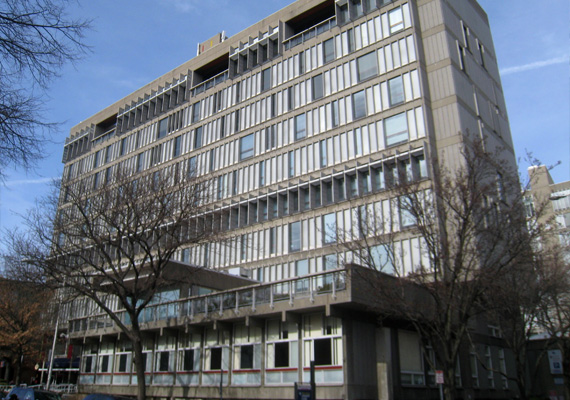
A bare land condominium unit is an actual plot of land that may or may not already be developed.
Owners of bare land condominiums have full (freehold) ownership of everything inside the unit’s land boundaries, which may include a house, garage, trees, and shrubs. If the unit has been developed, a Real Property Report will show the unit’s boundaries and the location of all structures within the boundaries.
Owners are responsible for maintaining everything inside the boundaries of their unit, which makes bare land condo ownership more like traditional home ownership. Owners are responsible for shoveling snow, landscaping, and making exterior repairs (i.e. replacing the roof and siding). However, in some cases, these responsibilities may be transferred to the condominium corporation. Where the corporation is responsible, the exterior property becomes managed property. This is not the same as common property since the owner continues to keep his or her freehold ownership of the managed property.
Common property in bare land condominiums will vary depending on the type of development. It may include sidewalks, roads, parks, and/or recreational facilities like pools or golf courses.
Condominiums come in all shapes and sizes. Apartment-style units located in high or low rise buildings are generally conventional, while townhouses or detached dwellings are often bare land units.
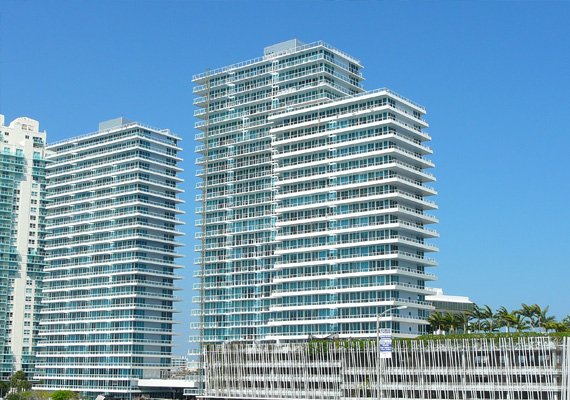
Most commonly associated with the term condominium, high-rise buildings offer new or resale conventional condominium units with a variety of amenities. Some high-rise buildings may be conversion properties and some may be mixed-use developments with retail or commercial condo units on the lower levels.
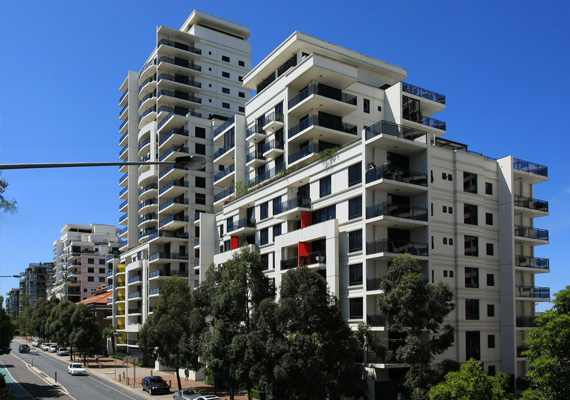
Sometimes a more affordable option to high-rise condos, low-rise condominium buildings also offer new or resale conventional condominium units. In Alberta, many low-rise condominium buildings are converted rental properties.

Sometimes a more affordable option to high-rise condos, low-rise condominium buildings also offer new or resale conventional condominium units. In Alberta, many low-rise condominium buildings are converted rental properties.

Townhouses or rowhouses are a great option for families or individuals looking for outdoor space. They are available as conventional or bare land condominiums.
With conventional townhouses or rowhouses, the exterior is common property that is usually maintained by the condominium corporation (though potential buyers should always check the bylaws to confirm).
If the townhouse or rowhouse is a bare land condominium, the owner has complete ownership and control over the land up to the property’s boundaries. This means the owner is responsible for landscaping and maintaining any outdoor structures like a patio or deck. In some instances, the responsibility for maintenance tasks may be transferred to the condominium corporation.
Buyers should always confirm what type of condominium they are purchasing.
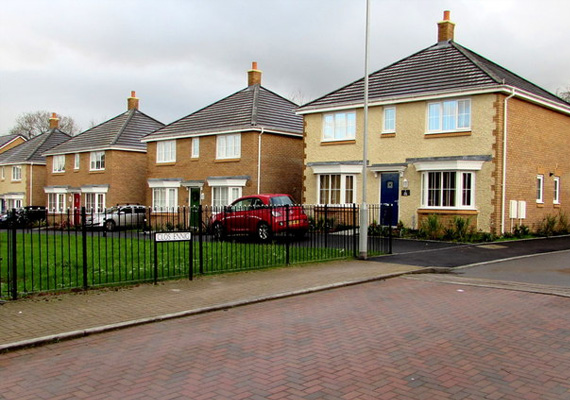
Occasionally, detached homes are part of a condominium complex. A gated community may be an example of a condominium complex that includes detached homes. Common property would include the roadways, sidewalks, and any recreational facilities. Luxury developments may include golf courses or tennis courts as common property amenities.
Condominium bylaws govern how the condominium corporation is run. They often address matters such as the election and practices of the board of directors, the collection of contributions, and how rules are passed. Rules often supplement the bylaws. The rules focus on the day-to-day concerns of condo living to help ensure it is a pleasant and attractive place to live or work.
Condominium bylaws also govern the condominium complex and every condominium is legally required to have a set of bylaws and to enforce them. Bylaws apply to all owners in a condominium, as well as anyone renting or visiting the condominium.
Bylaws can cover a wide variety of issues, including but not limited to:
1. Pets: whether they’re allowed, how many and types are allowed, whether board approval is required, etc.
2. Age Restrictions: whether there is a minimum age to live in the building, whether children are allowed, etc.
3. Aesthetic restrictions: colour of window coverings, whether planters are allowed on balconies, etc.
4. Renovation guidelines: installation of hardwood flooring may require extra soundproofing, etc.
5. Parking restrictions: types of vehicles that can be parked, visitor parking rules, etc.
6. Use of amenities: hours of operation, maintenance standards, visitor policies, etc.
7. Condo governance: electing board members, meeting schedule, voting procedures, bylaw amendments, etc.
8. Bylaw enforcement: penalties for not following the condo bylaws.
Condominiums – Sellers
Disclosure obligations
As a seller, you are legally obligated to disclose any material latent defects you are aware of that the buyer could not identify through a visual inspection of the property. These defects may be related to the common property or the condominium unit.
You are also required to disclose any upcoming special assessments that are not listed in the documents requested by the buyer.
Standard purchase agreements in Alberta also require sellers to confirm the unit complies with municipal bylaws and that the appliances are in working order.
Failing to disclose any of the information above could result in the purchaser suing you in the future.
Document collection
As a seller, you are under no legal obligation to provide buyers with any documents but it will likely help you sell your unit faster if you’re able to provide key documents to buyers in a timely manner.
Be aware: Certain purchase agreements require sellers to provide documents to buyers, placing a legal obligation on sellers. In this case, it is extremely important to have all of the documents ready before you list the unit for sale so that you know exactly what you are selling and what buyers will see.
Important documents
The most recent reserve fund report and plan. A well-funded reserve fund can be an important selling feature that shows buyers the condominium corporation is in good financial health.
The corporation’s operating budget. This shows buyers what the corporation is spending owners’ condominium contributions (fees) on – amenities, property management, contractors, etc.
Recent meeting minutes from condo board meetings. These will give buyers insight into whether there are upcoming major repairs or budget deficits as this could mean increasing condominium contributions (fees).
The corporation’s bylaws and rules. Buyers will definitely want to see what the rules are in the complex regarding pets, parking, and amenity use.
A real property report if the unit is a bare land unit with a structure. This is a physical survey of the land and its structures.
Collecting documents can be a time-consuming process so it is recommended you start early to ensure you have all documents ready to go before the unit is listed for sale.
Condominiums – Renters
Information You Must Give the Condominium Board
If you are planning to rent your condominium unit, you are responsible for providing the condominium board with certain written information. The condominium board cannot prevent you from renting your unit but they are legally entitled to the following information:
Security Deposits
The condominium corporation has the right to ask you to provide a security deposit if you are renting your unit. The security deposit is intended to cover any damage to the common property or exclusive use areas caused by your tenant. The security deposit cannot be more than what you are charging for one month’s rent.
When you give the condominium board notice that you are no longer renting the unit to a tenant, the board must deliver a statement of account and any unused portion of your common property security deposit to you within 20 days. A statement of account will outline any deductions made by the condominium corporation and why the deductions were made.
In some cases, a condominium board may need additional time to determine how much needs to be deducted from the deposit (i.e. a contractor needs to provide an estimate of costs). If this is the case, the board must provide an estimated statement of account within 20 days and a final statement of account within 60 days.
You can ask the tenant for a security deposit on your unit but you cannot use this money to pay the condominium corporation’s security deposit. You must put the tenant’s security deposit money into a trust account within 2 banking days of receiving it. You may also be required to pay interest on the tenant’s security deposit. For more information about security deposits, visit Laws for Landlords and Tenants in Alberta.
Under the Residential Tenancies Act (RTA), you must do written unit move-in and move-out inspection reports with your tenant and ensure both you and the tenant each have a copy of each. You cannot make any deductions from a tenant’s security deposit to pay for damage they have done to your unit if you have not completed written move-in and move-out inspection reports
Know Your Bylaws
Tenants are required to follow the condominium’s bylaws during their tenancy and they should have access to a copy of the bylaws. As a responsible landlord, you should familiarize yourself with the bylaws so that you can properly advise the tenant about the condominium’s rules and ensure the lease agreement accurately reflects the bylaws.
For example, if the bylaws do not allow pets in the building, you should ensure the lease agreement has a no pets clause. If your lease agreement states that pets are allowed, that provision is not valid because it violates the bylaws. You could be held responsible if the tenant was a pet owner and was evicted due to your negligence.
Condominium Board’s Right to Evict
The Condominium Property Act gives the condominium board the power to evict a tenant who has:
After the tenant has committed one of the above acts, the condominium board has to give the tenant written notice to give up possession of the unit. The notice must also be served on the owner of the unit. The owner cannot prevent the condominium board from evicting the tenant.
The tenant must move out by the last day of the month immediately following the month the notice is served. For example, if the notice was served on May 14, the tenant would need to leave by June 30.
If a tenant has received a notice to give up possession but does not move out, the condominium board has the right to make an application in the Court of Queen’s Bench for an order requiring the tenant to leave.
Application for Immediate Eviction
There are certain cases where a condominium board can go straight to court and request an immediate eviction order.
A condominium board can make an application for immediate eviction if a tenant:
If such an application is made, the corporation must notify the tenant and owner of the unit. A court hearing will be held where a judge will decide whether to grant an order for the tenant to immediately give up possession of the unit.
Owners Can Also Evict Tenants
The owner of the condominium unit also has the power to evict if the tenant has committed a substantial breach under the Residential Tenancies Act. More information about evictions can be found by visiting Laws for Landlords and Tenants in Alberta: Eviction Notices.
If you are planning to rent your condominium unit, the lease should clearly state whether or not the tenant is responsible for paying the condominium contributions. Keep in mind that serious consequences can result if the condominium contributions are not paid.
If you are renting your unit and condominium contributions go unpaid, the condominium corporation can require the tenant to pay the rent to the corporation instead of you to cover the unpaid contributions. If you are at fault for not paying the contributions, you cannot take any actions against the tenant.